

You wake up tired. You go through the entire day feeling like you are running on empty. Work piles up, but you cannot bring yourself to care anymore. You used to be sharp, motivated, full of ideas now everything feels heavy, pointless, and exhausting. If this sounds like your daily reality, you are not lazy. You are not weak. You are burnt out.
Burnout is no longer just a corporate buzzword. In 2026, it has become one of the most serious mental health crises affecting people across every age group, profession, and walk of life. From students and working professionals to homemakers and entrepreneurs burnout does not discriminate. And yet, it remains one of the most ignored and misunderstood health issues of our time. It is time we talk about it honestly.
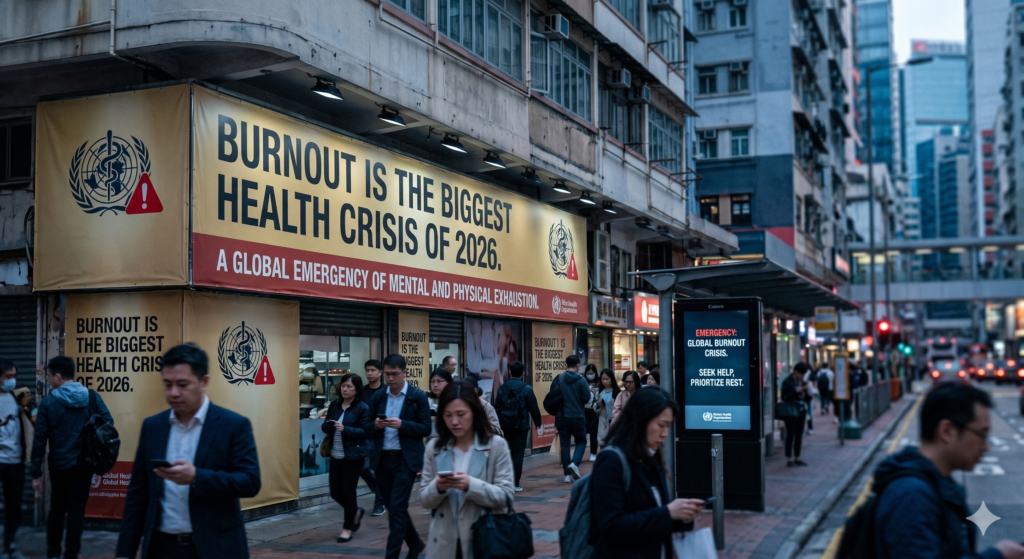
What Is Burnout — And Is It Really That Serious?
Burnout is a state of chronic physical, emotional, and mental exhaustion caused by prolonged stress — usually related to work, caregiving, or overwhelming responsibilities. The World Health Organization (WHO) officially recognized burnout as an occupational phenomenon in 2019, and since then, cases have risen at an alarming rate globally. By 2026, mental health experts are calling it a full-scale public health crisis.
Unlike regular tiredness that goes away with a good night’s sleep, burnout is deep and persistent. It affects your ability to think clearly, feel emotions normally, maintain relationships, and even take care of your basic physical health. Left unaddressed, burnout can lead to anxiety disorders, clinical depression, cardiovascular disease, weakened immunity, and complete emotional shutdown. It is not something you can simply push through — it needs real attention and recovery.
Warning Signs of Burnout You Should Never Ignore
One of the reasons burnout becomes so severe is that people fail to recognize it early. The warning signs of burnout creep in slowly, disguised as everyday stress or a rough week at work. By the time most people realize what is happening, they are already deep in it.
The most common burnout symptoms include constant fatigue that does not improve with rest, a growing sense of detachment or cynicism toward your work and relationships, reduced productivity despite working longer hours, frequent headaches, body aches, or getting sick more often than usual, difficulty concentrating or making simple decisions, loss of motivation and creativity, irritability and emotional outbursts over minor things, and a feeling of dread every Sunday night before the work week begins.
If you are experiencing three or more of these burnout symptoms consistently, it is a strong signal that your mental and physical health needs immediate attention. Do not wait for a breakdown to take it seriously.
Why Is Burnout Getting Worse in 2026?
Several powerful forces have converged to make burnout worse than ever in 2026. The first is the always-on work culture fueled by remote work and digital connectivity. When your home is also your office, the boundary between work and personal life disappears completely. Emails at 11 PM, Slack messages on weekends, video calls during lunch — there is no real switch-off moment anymore.
Social media plays an equally damaging role. The constant comparison culture — seeing curated highlight reels of other people’s success, fitness, travel, and relationships — fuels feelings of inadequacy, FOMO, and chronic low-grade anxiety. Add economic pressure, job insecurity, rising cost of living, and global uncertainty to the mix, and you have a perfect recipe for a mental health crisis at scale.
In India specifically, workplace burnout has surged dramatically. A 2025 survey found that over 62% of Indian employees reported experiencing moderate to severe burnout — one of the highest rates in Asia. Long working hours, intense competition, lack of mental health support at workplaces, and the cultural pressure to “keep going no matter what” have made Indian professionals particularly vulnerable to burnout in 2026.
Burnout vs Stress They Are Not the Same Thing
Many people confuse burnout with stress, but understanding the difference is crucial for proper mental health recovery. Stress is typically characterized by too much — too many demands, too many responsibilities, too much pressure. It feels urgent and overwhelming, but there is still emotion and energy behind it. You feel stressed because things matter to you.
Burnout, on the other hand, is characterized by too little — too little energy, too little motivation, too little care. Where stress makes everything feel urgent, burnout makes everything feel meaningless. You stop caring about things that once mattered deeply to you. That emotional numbness and detachment is what sets burnout apart from regular stress — and it is what makes burnout recovery more complex and time-consuming.
How to Recover from Burnout — Practical Steps That Work
Recovering from burnout is not about taking a two-day vacation and jumping back in. Real burnout recovery requires consistent, intentional changes to how you work, rest, and live. Here is what actually helps:
The first and most important step is to acknowledge it. Stop telling yourself you are just tired or being dramatic. Naming burnout for what it is gives you the power to address it properly. Second, set hard boundaries around your work time. Turn off work notifications after a fixed hour. Do not check emails on weekends. Your time outside work is not a luxury — it is a medical necessity.
Third, reconnect with activities that bring you genuine joy — not productivity, not self-improvement, just pure enjoyment. Read a book for fun. Cook a meal you love. Take a slow walk without your phone. These small moments of pleasure are powerful medicine for a burnt-out mind. Fourth, prioritize sleep above everything else. Sleep is when your brain processes stress, consolidates memory, and repairs itself. Without quality sleep, burnout recovery is nearly impossible.
Fifth — and perhaps most importantly — seek professional mental health support. A therapist or counselor can help you identify the root causes of your burnout, develop coping strategies, and rebuild a healthier relationship with work and life. In 2026, seeking therapy is not a sign of weakness. It is one of the smartest and bravest things you can do for yourself.
How Workplaces Can Help Fight the Burnout Crisis
Burnout is not just a personal problem — it is an organizational one. Companies that ignore employee mental health pay a heavy price through reduced productivity, high turnover, absenteeism, and loss of top talent. Forward-thinking organizations in 2026 are investing in mental health days, flexible work schedules, employee assistance programs (EAPs), and creating cultures where saying “I need a break” is celebrated rather than stigmatized.
If you are a manager or leader, the single most powerful thing you can do is model healthy boundaries yourself. When leaders log off on time, take their leaves, and talk openly about mental health, it gives their entire team permission to do the same. Culture change starts at the top.
You Are Not a Machine — And You Were Never Meant to Be
Burnout in 2026 is not a personal failure. It is the predictable result of a world that demands constant output, glorifies hustle, and treats rest as laziness. But the human body and mind were never designed to run at full speed without stopping. Rest is not a reward for hard work — it is a requirement for it.
If you are burnt out right now, please hear this: you are allowed to slow down. You are allowed to ask for help. You are allowed to put your mental health first without guilt or apology. Taking care of yourself is not selfish — it is the foundation of everything else you want to do and be in this world.
Because you cannot pour from an empty cup. And the world needs you full.